Receive a tailored quote within 24 hours Request a quote

Corrosion resistance coatings

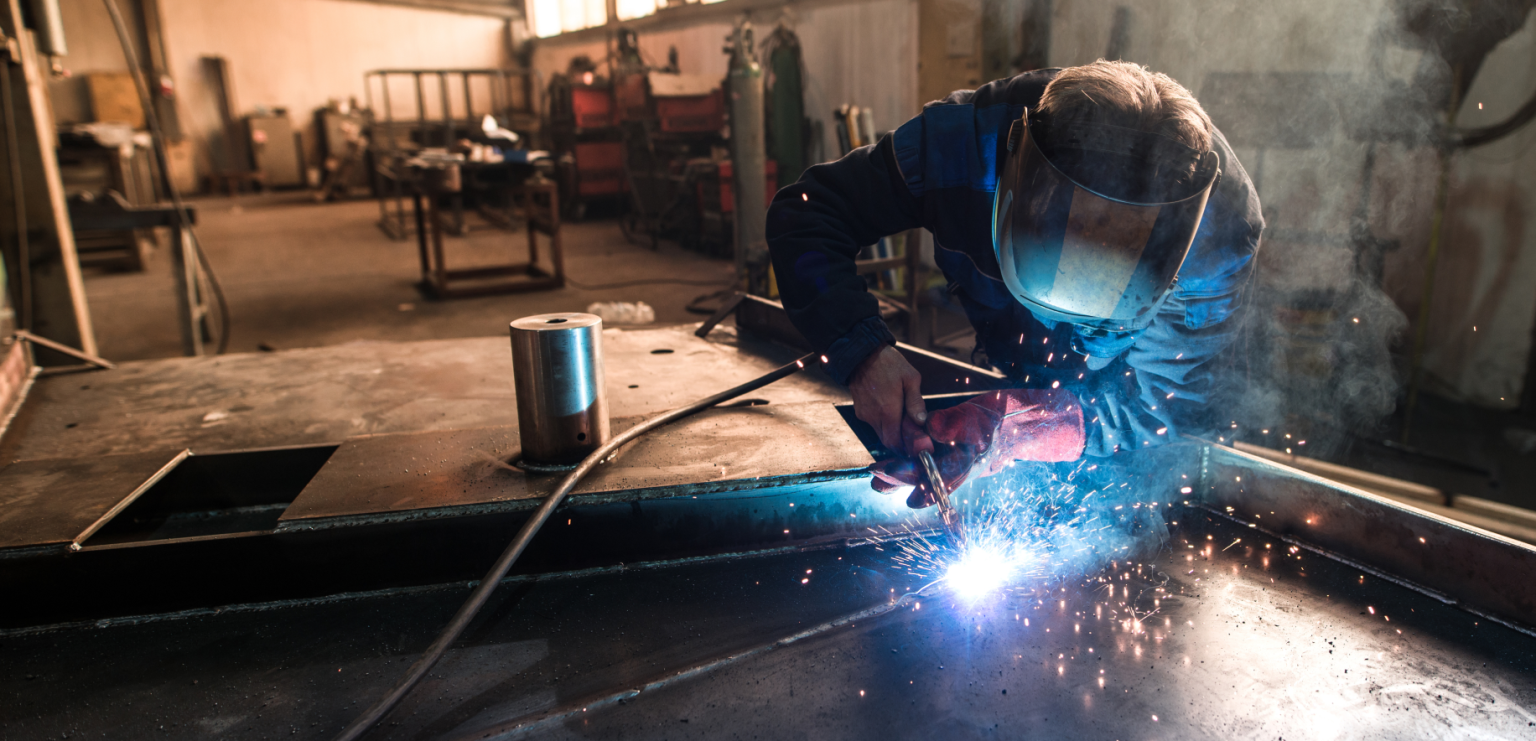
Metal components in industrial applications are continuously exposed to moisture, chemicals, temperature fluctuations and mechanical loads. Without adequate protection, this leads to corrosion, accelerated wear and unplanned downtime. Components lose reliability, while maintenance and replacement costs increase.

Corrosion resistance coatings are used as an anti-corrosion measure to protect metal components against attack by moisture, chemicals and salt. They extend component service life and ensure that installations continue to operate safely and predictably, even under severe operating conditions.

What is corrosion and why is protection necessary?

Corrosion is a chemical or electrochemical process in which metals react with their environment and gradually lose material. In practice, this manifests itself in rust formation, pitting, stress corrosion or galvanic corrosion.

In sectors such as the process industry, offshore, mechanical engineering and power generation, corrosion can have direct consequences for operations, including:

Reduced mechanical strength of components- Accelerated wear and loss of function- Leaks or failure of critical parts- Higher maintenance and replacement costs

Well-designed corrosion protection is therefore essential to keep installations operating reliably and safely.
Corrosion resistance coatings

How do corrosion-resistant coatings work?

Corrosion-resistant coatings protect metal surfaces through different mechanisms. Within traditional surface treatment methods, the following principles are mainly applied.

Barrier protection

With barrier coatings, the coating forms a sealing layer between the metal and the environment. This limits direct contact with moisture, oxygen and chemicals. These coatings are relatively easy to apply, but remain vulnerable to damage, wear and underfilm corrosion, especially under dynamic loading or point loading.

Sacrificial or cathodic protection

With metallic coatings such as galvanizing, a less noble metal is applied that sacrifices itself to protect the base material. This principle is effective under specific conditions, but offers limited protection when corrosion and wear occur simultaneously.

Metallurgical protection

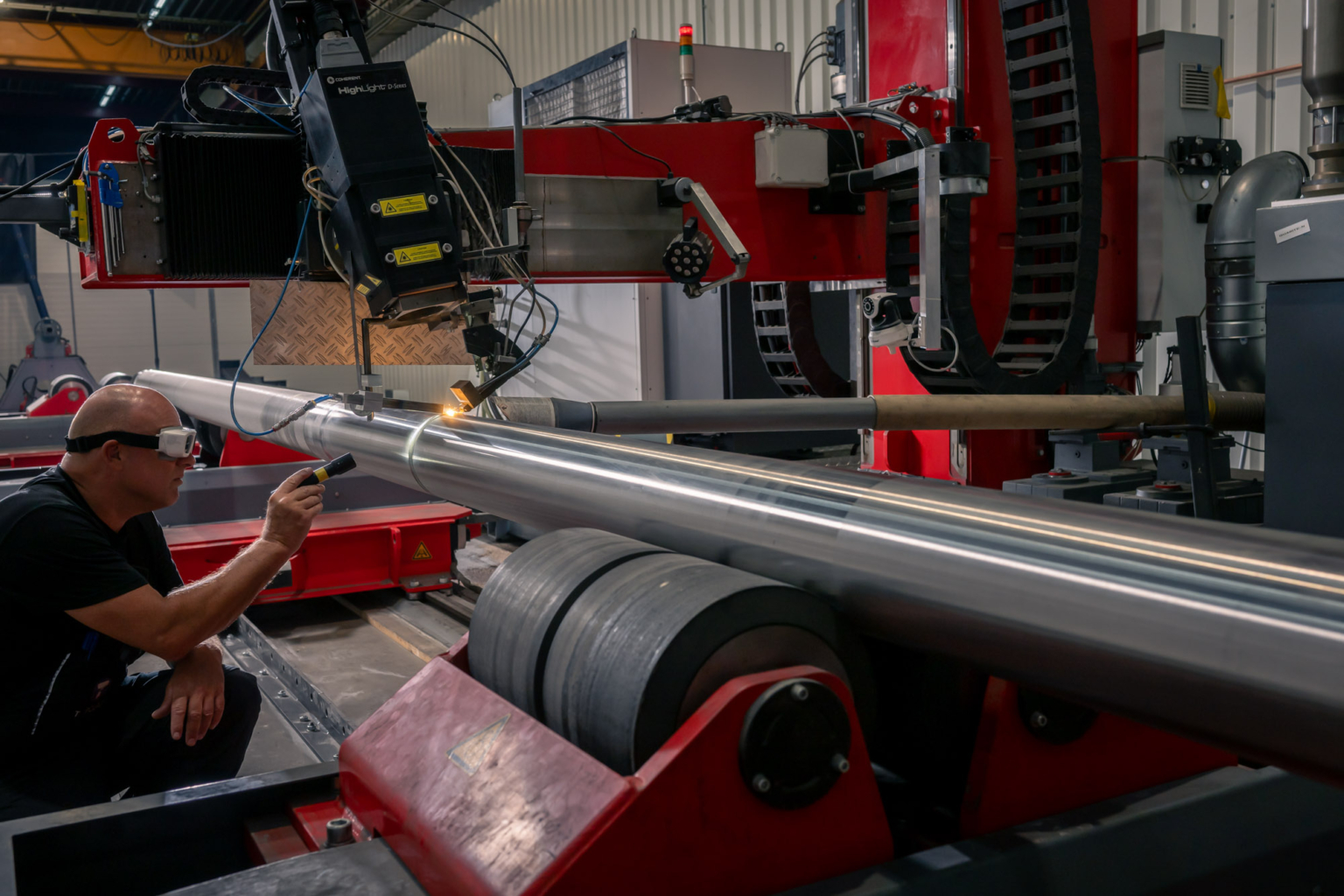
With advanced techniques such as laser cladding, a protective layer is metallurgically bonded to the base material. Instead of a mechanical adhesion interface, this creates an integrated layer with high density and excellent adhesion. This makes the method suitable for applications with demanding requirements in both corrosion and wear resistance.

Overview of corrosion-resistant coatings

The comparison below shows how different coating types relate to each other in terms of protection and service life.

For components that are subject to dynamic loading or long-term exposure to aggressive media, conventional coatings often do not provide sufficient long-term protection.
Corrosion resistance coatings

Laser cladding as a corrosion-resistant coating

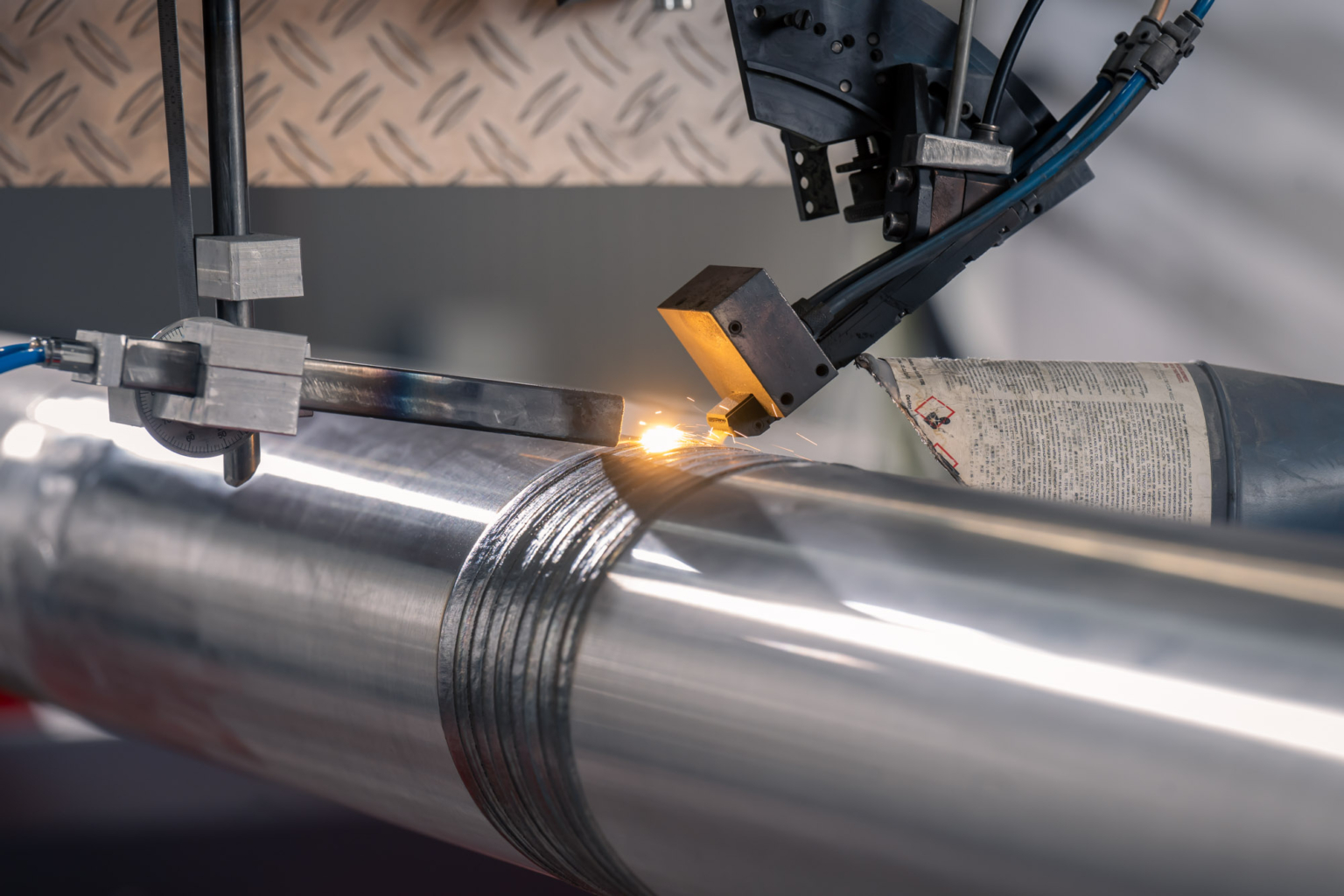
Laser cladding is used when conventional coatings fall short. The process applies a pore-free, metallurgically bonded protective layer that locally fuses with the base material. This creates a structural improvement of the surface instead of a temporary barrier. Laser cladding is therefore more than an anti-corrosion measure. It is a structural materials solution.

The laser-clad layer is resistant to both corrosion and wear and retains its properties under severe mechanical and chemical loading. Due to the localized heat input, distortion is limited and dilution of the base material remains minimal.

Key benefits of laser cladding as a corrosion-resistant coating include:

  • Very high resistance to corrosion and wear
  • Homogeneous microstructure without porosity
  • Metallurgical bond without risk of delamination
  • High dimensional accuracy, suitable for new components and refurbishment
Practical example: long-term protection in marine conditions

In marine and dredging environments, components are continuously exposed to salt water, slurries and highly abrasive media. Under these conditions, many conventional coatings fail relatively quickly.

A recently inspected overflow shaft from a major dredging contractor clearly illustrates this difference. The rod was taken out of service and examined after many years of operation. Despite prolonged exposure to salt water, mud and abrasive materials, no corrosion was observed.

By comparison, HVOF coatings used under similar conditions often show the first signs of corrosion in practice after only about two years. The difference lies not only in protection, but in the extent to which the surface remains structurally resistant to combined wear and corrosion loading.

For this type of application, specially developed clad layers are used, such as Quarite NR+, which are tailored to offshore, dredging and other heavily loaded marine environments.

Corrosion resistance coatings

When is laser cladding the right choice?

Laser cladding is particularly suitable when components are exposed to aggressive conditions over long periods and failures result in high costs. Typical situations include simultaneous corrosion and wear, or where maintenance intervals are under pressure.

In applications with limited corrosion and low mechanical load, conventional coatings can be technically and economically sufficient. However, as the corrosive load increases, these solutions fall short in terms of service life and reliability, even when there is little or no mechanical loading. In such conditions, laser cladding is a more sustainable alternative.

Laser cladding is widely used on shafts, rods, rolls and other heavily loaded components in the process industry, offshore and the energy sector. The technology also offers a reliable alternative to full replacement in overhaul and repair.

Corrosion-resistant coating or material substitution?

To prevent corrosion, stainless steel or high-grade alloys are often selected. This is a logical choice, but not always the most efficient or best-performing solution.

With laser cladding, only the surface is reinforced with a wear- and corrosion-resistant layer, while the base material is retained. This makes it possible to achieve properties that in many cases outperform standard stainless steel, for example under aggressive corrosion or combined wear. An important advantage is that reinforcement can be applied very selectively: only where it is needed. This saves material, reduces costs and shortens lead time. From a Total Cost of Ownership perspective, laser cladding is therefore often a smarter and more sustainable choice.

Corrosion resistance coatings

Test methods and quality assurance

The performance of corrosion-resistant laser-clad layers is verified using recognized test methods. These include corrosion tests in accordance with ISO 10289, wear tests such as ASTM G65, erosion tests and measurements of adhesion and coating thickness. Because laser cladding forms a metallurgically integrated part of the component, the test results closely reflect actual operating conditions. This results in a reliable and reproducible level of protection.

Which corrosion-resistant coating is suitable for your application?

The choice of coating depends on several factors, such as the base material, chemical and thermal loading, desired service life and maintenance strategy. If a conventional coating does not provide sufficient protection, laser cladding is a sustainable and future-proof solution. Topclad supports the selection of the right clad layer, both for new components and for overhaul and repair.

Where is laser cladding used?

Laser cladding is used in markets where components are exposed to corrosion, wear and harsh operating conditions. These include the marine industry, offshore, oil & gas, steel production, power generation and mining. In all these sectors, laser cladding demonstrably contributes to improved performance, longer component life and lower maintenance costs. The technology makes it possible to tailor solutions precisely to the requirements of each application.

We are Topclad

Topclad is Europe’s leading manufacturer of innovative laser clad layers, based in Lelystad, the Netherlands. We specialize in developing and applying laser clad layers for the most demanding industries, including oil & gas, offshore, dredging, mining, bridges & water locks, steel manufacturing, and food processing.

Our mission is to provide components with superior protection against wear, corrosion, and impact, resulting in significantly improved reliability and uptime of capital-intensive equipment. With over 16 years of experience, a steadfast commitment to quality, and a proven track record of over 15,000 laser cladded components, we deliver solutions that enhance the performance and longevity of your critical machinery.

Corrosion resistance coatings
Axel Jansen
Director & Owner Topclad

Why Topclad?

  • Over 16 years laser cladding experience with over 15.000 cladded components
  • More than 10 in-house developed laser clad layers
  • Commitment to quality
  • Expertise in comprehensive repairs
  • 24.000 mm clad length capacity and 2.200 clad diameter capacity
  • Chromium-6-free solutions

Ready to talk
with us?

Topclad Laser Cladding is the leading manufacturer of innovative laser clad layers in Europe. Based in Lelystad, the Netherlands, Topclad Laser Cladding develops and applies laser clad layers for the most demanding industries including oil, gas, sustainable energy, offshore, dredging, mining, bridges and water locks, steel manufacturing and food processing.

"*" geeft vereiste velden aan

Dit veld is bedoeld voor validatiedoeleinden en moet niet worden gewijzigd.
When you click Submit, you agree to our terms and conditions & privacy policy
Corrosion resistance coatings
Change language
English English
German German
Dutch Dutch
French French
Italian Italian
Request a quoteLooking for a superior protection of your critical equipment? Fill out the form and our team will get back to you with a tailored quote as soon as possible. Today prepared for tomorrow!

"*" geeft vereiste velden aan

Dit veld is bedoeld voor validatiedoeleinden en moet niet worden gewijzigd.
When you click Submit, you agree to our terms and conditions & privacy policy